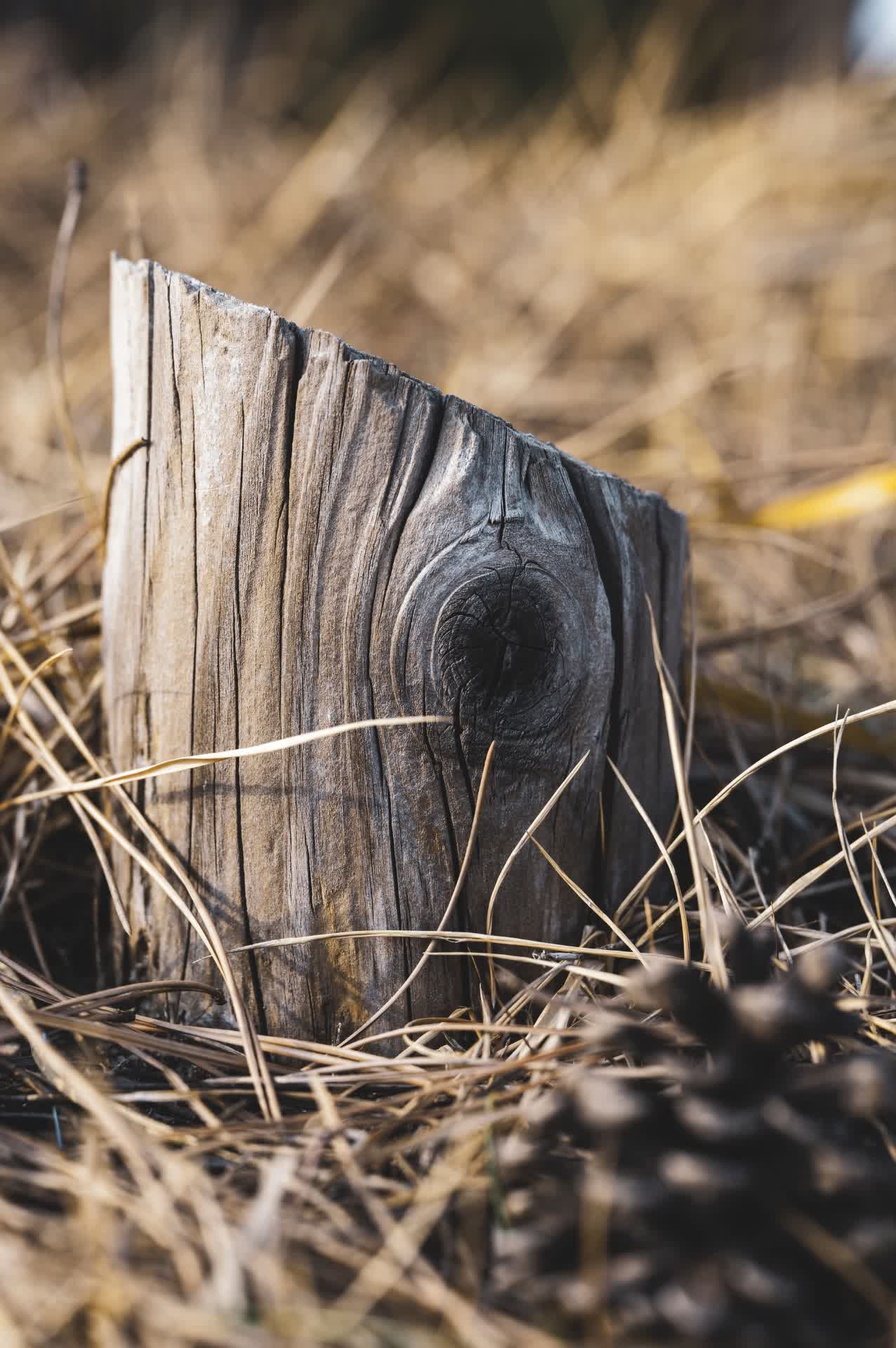
Tree stump removal is one of the most searched services in the Kerrville area, but the phrase can mean two very different things. Some homeowners picture a stump grinder shaving the wood down below grade. Others picture heavy equipment digging the entire stump and root ball out of the ground. Both are valid approaches, but they produce very different results, costs, and levels of disruption. This guide explains the technical difference between stump grinding and full stump removal, the cost implications around Kerrville and the Texas Hill Country, and why specialized grinding is usually the better choice for residential properties and ranch land.
Stump grinding: the most common type of tree stump removal
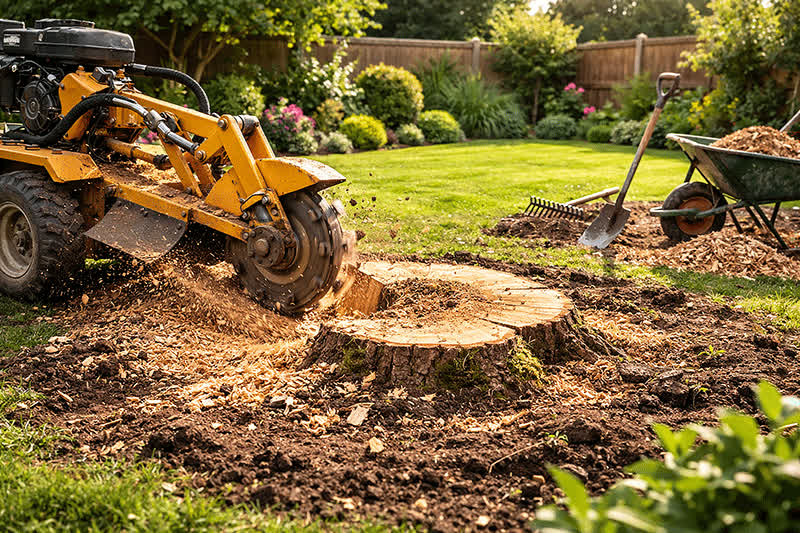
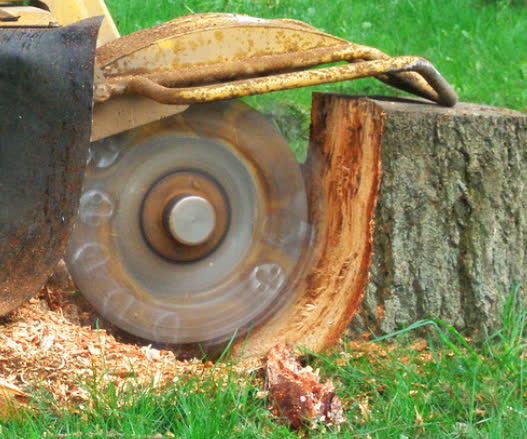
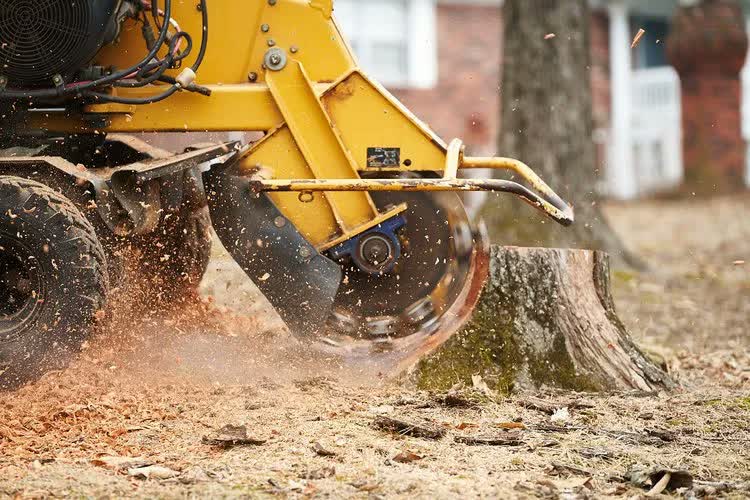
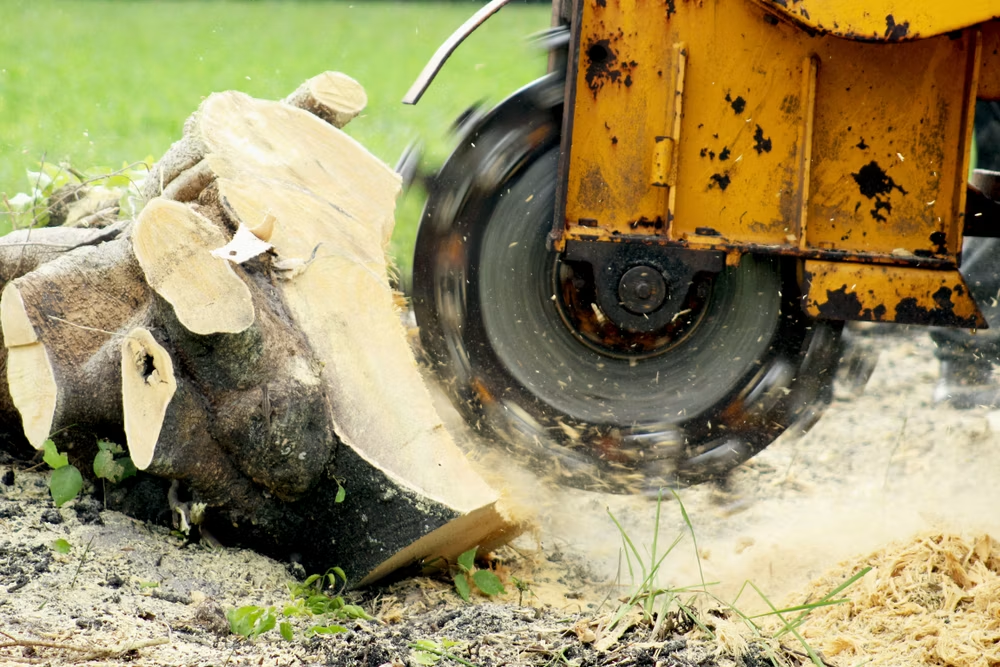
Stump grinding is the most common type of tree stump removal used by homeowners and ranchers around Kerrville. A cutter wheel shaves the stump and root flare below the surrounding soil level, taking controlled passes and turning the visible wood into chips. The area is cleaned up and the surrounding soil, lawn, and landscape remain largely intact.
Define complete stump and root-ball excavation
Full excavation uses a heavier machine, often an excavator, backhoe, or skid steer, to physically dig the stump and its root ball out of the ground. The entire structure comes out. What remains is a hole that must be backfilled and, in most cases, reworked before any finished use.
Equipment differences
Grinding uses a purpose-built stump grinder. Sizes range from walk-behind units that fit through a residential gate to larger self-propelled machines for open ground.
Excavation uses much larger equipment that requires wider access, more space to operate, and often trucks to haul the removed material away.
Ground disturbance
Grinding disturbs a targeted area around the stump. Excavation disturbs a much wider zone because the machine must dig around, under, and beside the root ball to lift it. Adjacent lawn, plants, and landscape features are more likely to be affected during excavation.
Hole size
Grinding leaves a saucer-shaped depression roughly the size of the stump and flare, filled with chips. Excavation leaves a real hole, sometimes several feet deep and considerably wider than the visible stump.
Backfill needs
A ground stump area typically needs some soil to backfill a shallow depression if the lawn will be replanted. An excavated site needs a substantial amount of soil, and the fill often has to be compacted in layers to prevent long-term settling.
Lawn damage
Grinding causes minor tire tracks and localized wear that grass usually recovers from within a few weeks. Excavation causes broader damage to lawn, edging, and any nearby beds, often requiring landscape restoration as a separate scope.
Access requirements
Grinding machines exist in sizes that fit through a standard residential gate. Excavation machines usually do not. If the stump is in a fenced backyard, excavation may require removing fence sections or working through unusual access.
Time considerations
Grinding a residential stump typically fits into a single appointment. Excavation is a longer operation because the machine, the digging, the loading, the hauling, and the site cleanup all take real time.
Tree stump removal cost considerations in the Hill Country
Tree stump removal cost varies with each method, each site, and each contractor. As a general pattern in the Kerrville area, full excavation tends to be significantly more involved than grinding because the equipment, disposal, backfill, and site restoration are all larger scopes. Written estimates from local contractors are the honest source for your specific numbers.
What happens to the roots
Grinding leaves lateral roots in the ground, where they slowly decompose over years. Excavation attempts to remove the main root ball, but even excavation rarely pulls out every lateral root. Both approaches result in gradual root decomposition, one just does more of it up front.
Lawn and landscape projects
For most lawn and landscape uses, grinding is the practical fit. It disturbs the least, cleans up the fastest, and gets the area ready for grass, mulch, or beds without a large restoration project.
Fence projects
For new fencing where a stump used to be, adequate depth on a grind is often enough to allow standard post-hole digging. If the exact post location must land where the trunk sat, discuss depth carefully on the estimate.
Driveways, patios, pavers, and concrete
Grinding gets the wood well below the finished surface, and the contractor doing the hardscape can then excavate their base cleanly. In some cases, the builder may prefer full excavation to guarantee a wood-free foundation. Coordination between the grinder and the hardscape contractor helps avoid surprises.
Construction and foundation areas
For foundation pads, pool excavation, or any structural construction that will sit exactly where the stump was, the project engineer or builder generally drives the specification. Full excavation may be required. Grinding alone usually is not the right tool for those situations.
Utilities and septic systems
Utility trenches and septic components have their own excavation requirements. Grinding removes what is above ground and just below it. Any deeper trenching or system installation is a separate excavation scope by the utility or septic contractor.
Replanting another tree
Planting a new tree in the exact spot of an old one is difficult with grinding alone because roots and residual wood still occupy the soil column. Excavation of the immediate planting hole is often necessary. Shifting the new tree a few feet away is often the simpler answer.
When grinding is usually the practical choice
Standard residential lawn areas. Flowerbeds. Ranch pastures with multiple stumps. Areas being converted to mulch. Fence lines. Backyards with tight access. Anywhere the goal is to eliminate the stump without disturbing the surrounding property.
When excavation may be the more appropriate choice
Construction pads that must be wood-free. Certain utility installations. Replanting a new tree in the exact former location. Situations where a builder or engineer specifies full root removal.
Balanced comparison table
Grinding, Ground disturbance: minimal. Root removal: stump and flare, plus surface roots as needed; lateral roots remain to decompose. Access: fits through most residential gates. Cleanup: chips mounded over hole, or hauled if scoped. Typical use: lawns, landscaping, fences, most residential and ranch work. Remaining hole: shallow depression. Construction suitability: generally not a substitute for excavation on structural work.
Excavation, Ground disturbance: significant. Root removal: main root ball removed, though lateral roots may remain. Access: usually needs larger equipment access and staging space. Cleanup: hole must be backfilled and compacted; landscape restoration often required. Typical use: certain construction, utility, or replant projects. Remaining hole: large, needing engineered backfill in many cases. Construction suitability: often required for foundation, pool, or engineered pad work.
Balanced conclusion
Neither method is universally better. Grinding is the right tool for most residential and ranch tree stump removal because it is less disruptive and gets the area ready for normal use. Excavation is the right tool when a project genuinely requires the entire root ball out of the ground. Choosing between them is a matter of matching the method to what you plan to do with the site.
Why Cypress Creek Stump Grinding focuses on grinding
Cypress Creek Stump Grinding is a dedicated stump grinding specialist based in Kerrville, Texas. We keep the operation focused on one service so the equipment, the process, and the pricing stay efficient. For the vast majority of tree stump removal calls we receive across Kerrville, Ingram, Center Point, Comfort, Hunt, Harper, Mountain Home, Fredericksburg, Boerne, Bandera, Medina, and Junction, grinding is the practical, cost-effective choice that leaves the yard ready for grass, mulch, or the next landscaping step.
Tell us what you plan to do with the area and we will help you decide the right approach for your property.
Quick FAQs
Which method leaves less mess?
Grinding, in most cases. The disturbance is contained to the immediate work area, and the chip pile can be left, spread, or hauled.
Does excavation kill the roots more completely?
It removes more physical root material, but complete removal of every lateral root is rarely realistic. Both methods result in gradual decomposition of what remains.
Can grinding be enough for a fence or patio?
In many cases yes, with appropriate depth. Confirm with the hardscape contractor before scheduling the grind so the depth spec fits.
Is one method faster?
Grinding is typically faster because the equipment is smaller and the site cleanup is simpler.
How do I choose without regretting it?
Start with what you plan to do with the site. Match the method to the finished use, not the other way around.