Pricing is almost always the first question homeowners ask, and it is the hardest one to answer over the phone. Stump grinding costs vary widely because every stump, every yard, and every access situation is different. This article walks through the variables that move the number up or down, so that when you sit down with a written estimate you know exactly what you are looking at and what questions to ask.
Why there is no honest one-price answer
You will see companies online advertise a flat rate that sounds too good to be true, and often it is. Those numbers usually assume a small stump in an easy front yard with no cleanup and no complications. A real estimate reflects your specific stump, your specific yard, and the specific conditions of the day.
The variables below are the ones that actually shape the number. A good estimator walks the site, looks at each one, and gives you a written figure. That way you are comparing apples to apples if you gather more than one quote.
Minimum service charges
Almost every stump grinding company applies a minimum service charge, and there is a straightforward reason. Every job, even a small one, includes driving to the property, loading and unloading equipment, setting up, doing a safety check, running the machine, and cleaning up. Those costs exist whether the stump is 6 inches across or 26 inches across.
The minimum is not a gotcha. It is just the honest floor of what it takes to send a crew and a machine out. On a job with multiple stumps, that fixed cost gets spread across the whole visit, which is why per-stump pricing tends to look much better in bulk than one at a time.
Measuring the stump
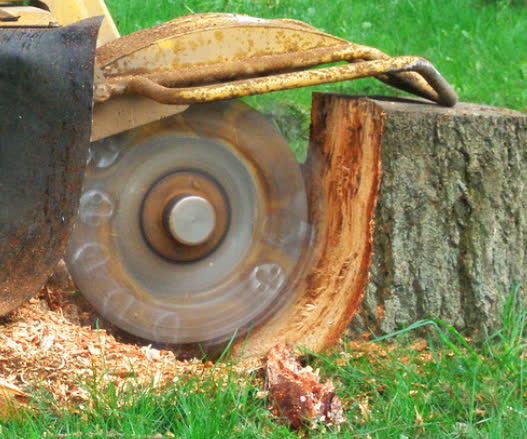
Stumps are measured across the widest visible point at ground level, including the root flare where appropriate. That measurement matters more than the height of the stump, because the wheel is working on the top surface, not chasing the sides.
A stump that looks 12 inches across at the cut can measure 20 inches or more once you account for the flare that fans out at the base. Estimators account for that because the flare is part of the work.
Diameter-based pricing
Many contractors quote by the inch of diameter. The per-inch rate varies from market to market and depends on the local cost of fuel, labor, equipment, and insurance. Some companies charge more per inch on smaller jobs because the fixed setup cost is a bigger share of the work. Others use a stepped rate that changes at certain size breakpoints.
There is no single correct number. What matters is that the method is clear on the written estimate and matches what actually gets ground.
Per-stump pricing
On some jobs, a flat per-stump price makes more sense than measuring every one. This is common for backyards with several similar stumps, or for cleanup projects where several small stumps sit close together. A single project price can also make life easier when there is a clear scope and predictable conditions.
Hourly or project pricing
Larger projects, ranch work, acreage with dozens of stumps, long surface roots, difficult access, or unusual cleanup, are often quoted by the project or with hourly time built in. On those jobs, per-inch pricing does not fairly represent the work.
An honest estimator explains the approach and gives a firm figure or a clear cap so you are not staring at an open-ended bill.
Tree species
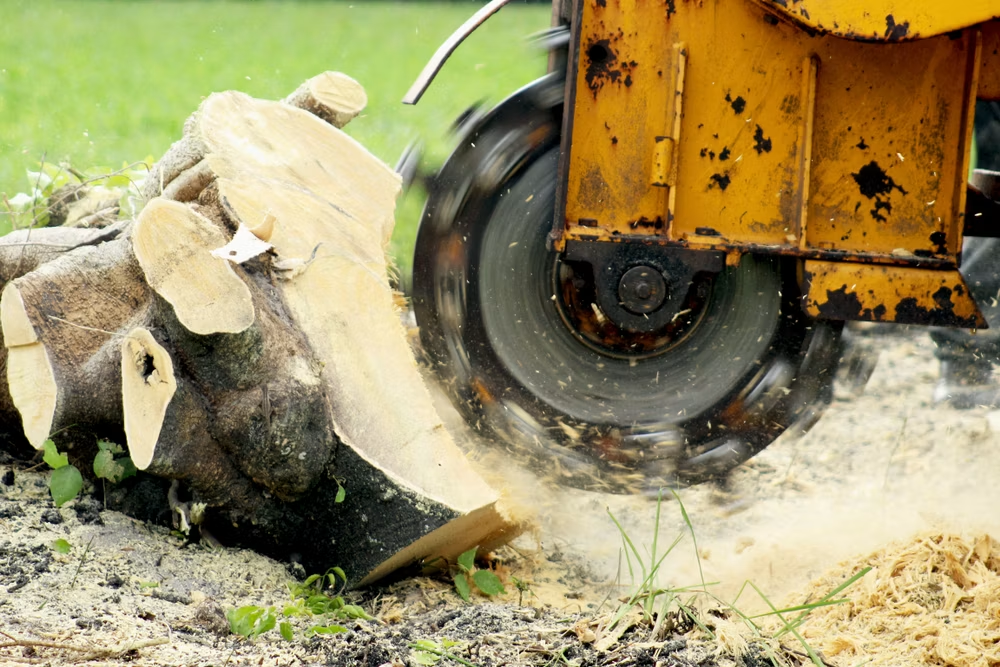
Species affects how quickly the wheel can work through the wood. Live oak and post oak are dense and grind slowly. Pecan has interlocked grain that dulls teeth. Mesquite hides a wide, tough root system under a small visible stump. Cedar elm and hackberry are somewhere in the middle. Ashe juniper, commonly called cedar, grinds faster than most hardwoods but often comes with a fibrous, dirt-filled base.
Rotten wood grinds quickly on the surface but can hide rocks or wire that surprise the wheel. No species has a fixed price attached to it. It is just one of the inputs that shapes production time.
Stump condition
The condition of the stump matters. A freshly cut stump is soft and predictable. A dry, weathered stump is harder. A rotten or hollow stump is faster on top but can hide surprises. Burned stumps often have baked-in soil and rock. Dirt-covered stumps have to be scraped before grinding, because dirt eats teeth faster than wood does.
Old fence stumps sometimes contain wire, nails, or hardware. Ranch stumps sometimes contain rocks that fell into the split when the tree was cut. Any of these will slow production and may require replacing teeth mid-job.
Root flare
The bigger the flare, the more work. Mature hardwoods usually have a flare that is significantly wider than the trunk itself. If the finished area will be mowed, sodded, seeded, or landscaped, the flare almost always needs to come down too, and that time is part of the estimate.
Grinding depth
Depth changes the number of passes and the amount of chip material generated. A shallow grind for a natural area takes less time than a deeper grind for a lawn, which takes less time than an even deeper grind for a paver patio or a replant. Discussing the depth ahead of time makes the estimate more accurate.
Number of stumps
Several accessible stumps on the same property are almost always more efficient than several separate visits. That is one place where combining work saves real money, because the fixed setup cost is only paid once. A per-stump rate on a multi-stump job typically looks much better than the same stump quoted by itself.
Machine access
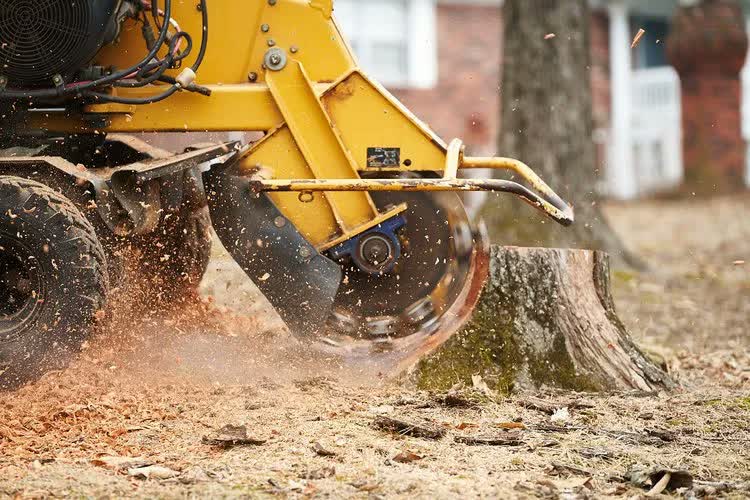
Access is one of the biggest quiet variables. Gate width, steps, retaining walls, patios, slopes, soft ground, and delicate landscaping all affect which machine can be used and how quickly the crew can move.
A stump you can drive right up to in a front yard is a very different job from the same stump in a backyard with a 36-inch gate, a swimming pool coping to protect, and a decorative rock border. Neither is impossible. They just take different equipment and different amounts of care.
If you have a narrow gate or a tight backyard, mention it when you request the estimate. It helps the crew bring the right machine on the first trip.
Limestone and rock
The Hill Country sits on limestone. Rock is often close to the surface, especially on ridges and hillsides. Grinding into or through rock is slow work and can shorten tooth life dramatically. An experienced operator watches for it and adjusts. If rock limits how deep the wheel can safely go, the estimator will explain that on site.
Nearby utilities and structures
Stumps near irrigation, septic components, propane lines, water lines, electrical, patios, driveways, retaining walls, or fences take more time to grind safely. The crew moves in smaller increments and stops more often to check clearance. That care is part of what you are paying for.
Cleanup options
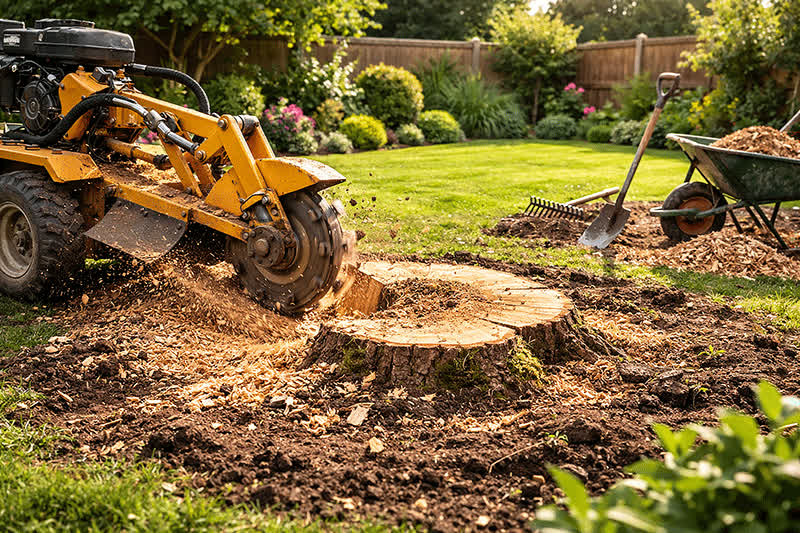
Cleanup is usually the last thing homeowners think about, and often one of the biggest choices they make. Leaving the chip pile in place is the default and included. Mounding, raking, and spreading are quick add-ons. Removing excess material, hauling chips off, or bringing in soil are separate scopes that need to be written in.
Full lawn restoration, new topsoil, sod, seed, watering, is a landscaping project, not a grinding one, and should be scoped separately.
Travel and service area
Distance from the shop matters. Kerrville and the immediate Hill Country are within a comfortable service radius. Longer drives may carry a small trip fee, especially for a single small stump. Combining a distant job with several stumps or with neighbors' work is a common way to keep travel cost reasonable.
Questions homeowners should ask a contractor
A few simple questions will tell you a lot about the company you are working with. Are you insured? What is your minimum charge? How do you measure the stump? What depth is included, and what would deeper cost? What does cleanup include and not include? Do you have a written estimate that spells this out?
Any honest company will answer without hedging.
What a written estimate should clarify
A good written estimate lists which stumps are included, the grinding depth, whether the root flare and surface roots are addressed, what cleanup covers, and whether hauling is included. If any part of the job is optional, it should be broken out so you can choose. The total should not be a mystery.
Example estimating scenarios
These are examples of the kinds of jobs an estimator sees, not price quotes. They show how the variables above combine on real properties.
One small accessible stump in an open front yard: minimal setup, quick grind, simple cleanup. Typically the lowest-cost service call.
One large live oak stump with a wide flare: dense wood, extra time on the flare, larger chip volume, may require a bigger machine.
Four stumps in one yard: setup paid once, per-stump time drops sharply, cleanup scaled to the full job.
Several ranch stumps across acreage: often quoted as a project, sometimes with hourly time built in, cleanup may simply mean leaving chips in place.
Tight-access backyard stump: smaller machine, careful path in and out, extra care around landscaping, the access is often the biggest input.
Stump beside concrete or fencing: slower work in the last few inches, more raking and blowing at the end, careful positioning of the wheel.
Every one of these gets a different number, and that is exactly the point. A written estimate is honest because it reflects the site.
Request a free onsite estimate and we will look at stump size, access, grinding depth, cleanup needs, and what you plan to do with the area afterward.
Quick FAQs
Do you charge for estimates?
In most cases no. The estimator comes out, walks the property with you, and leaves a written figure with no obligation to book.
Is there a minimum charge?
Yes, like almost every contractor in this trade. It covers the fixed cost of getting a crew and a machine to your site, and it comes off the top of any bundled work.
Can you quote from a photo?
Sometimes for a rough range, but a written price almost always requires an on-site look. Photos hide access, slope, root flare, and rock.
Do you offer volume pricing for HOAs or property managers?
Yes. Multiple stumps across one property or several properties can be bundled into a single visit for a better per-stump rate.
Do you accept card, check, or invoice?
Most common payment methods work. Confirm on the estimate.
Is a lower quote always a worse deal?
Not always, but read the scope carefully. A lower quote with shallower depth, no flare work, and no cleanup can end up costing more once you finish the job yourself.