If you've just had a tree cut down, or you inherited a yard full of stumps when you bought the property, you've probably discovered the same thing every Hill Country homeowner discovers eventually: a stump is a surprisingly stubborn piece of a tree. Most people only need stump work done once or twice in their life, so there is no reason you would already know how it works. This guide is written for exactly that homeowner. No jargon, no upsell, no exaggerated claims, just a straight explanation of what stump grinding is, how the machine actually removes the stump, and what your yard will look like when the crew pulls away.
What is left behind after a tree is cut down
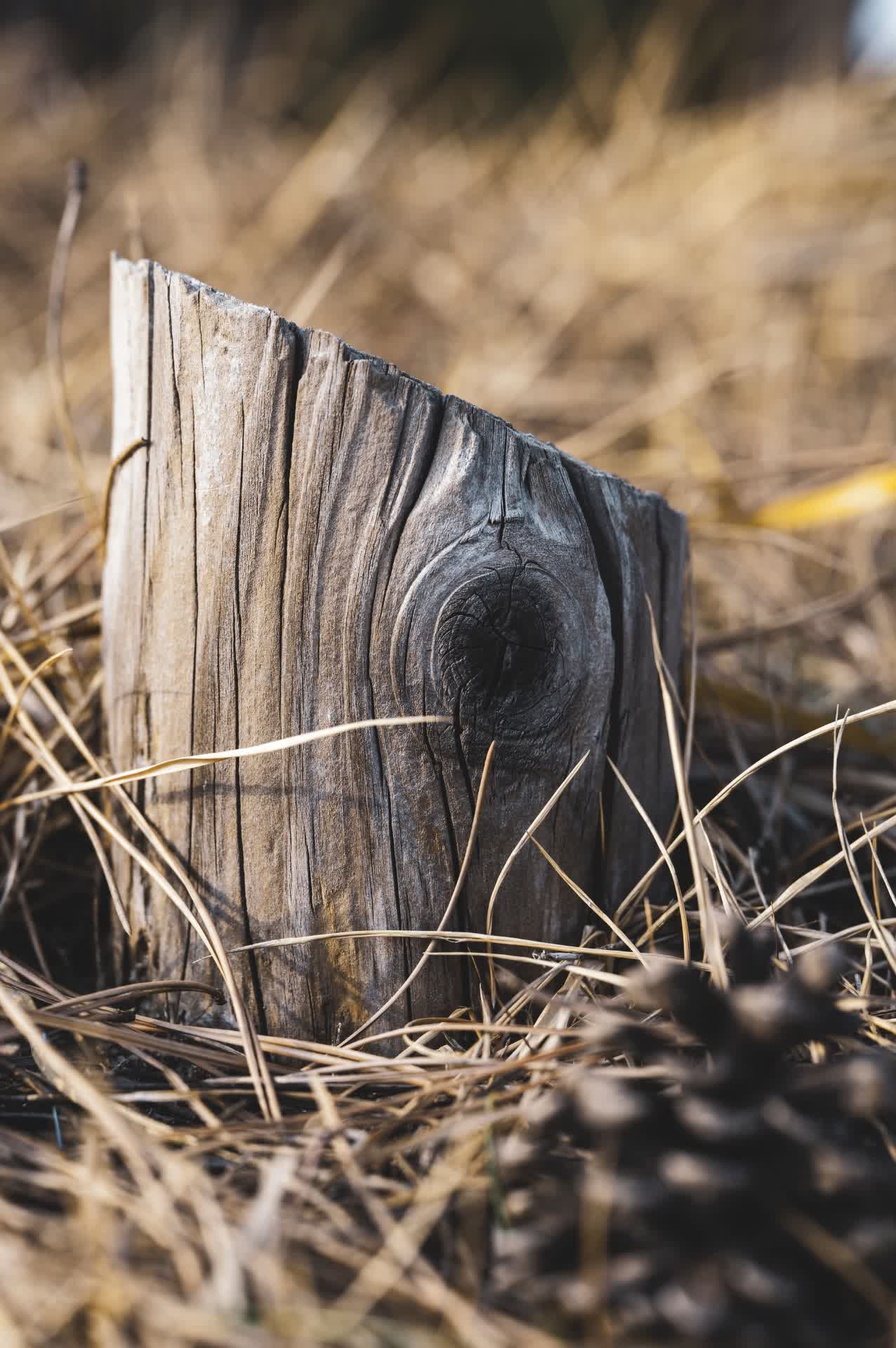
When a tree service cuts a tree down, they almost always leave the stump. Cutting flush with the ground is faster and safer than trying to dig anything out, and the chainsaw work stops at the point where the trunk meets the soil. What remains is more than just a disk of wood. Below the surface, the tree flares outward into a wide, woody base called the root flare, and the flare ties into a network of larger structural roots.
That is why a stump that looks small on top can feel enormous once you start scratching around it with a shovel. The visible wood is only a fraction of what the tree was anchored with. Grinding is designed to deal with the visible stump plus the flare, not to chase every underground root across the yard.
What stump grinding actually means
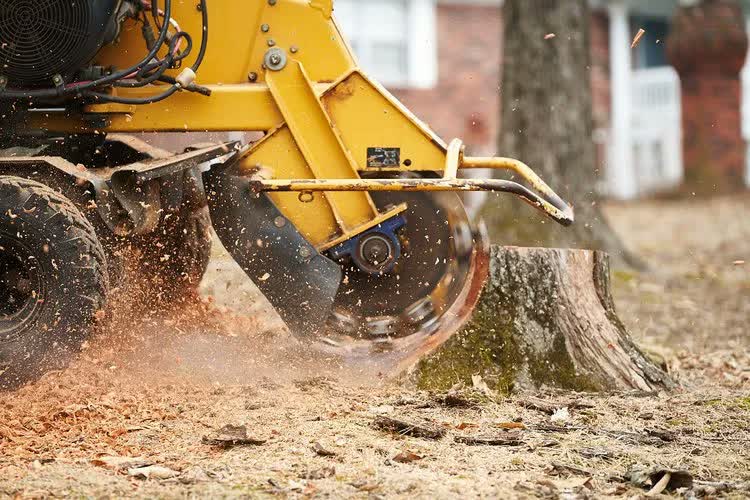
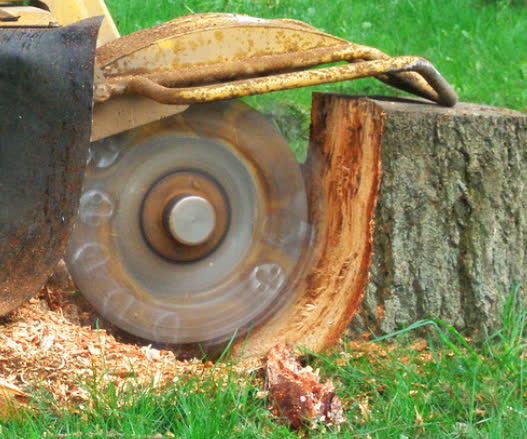
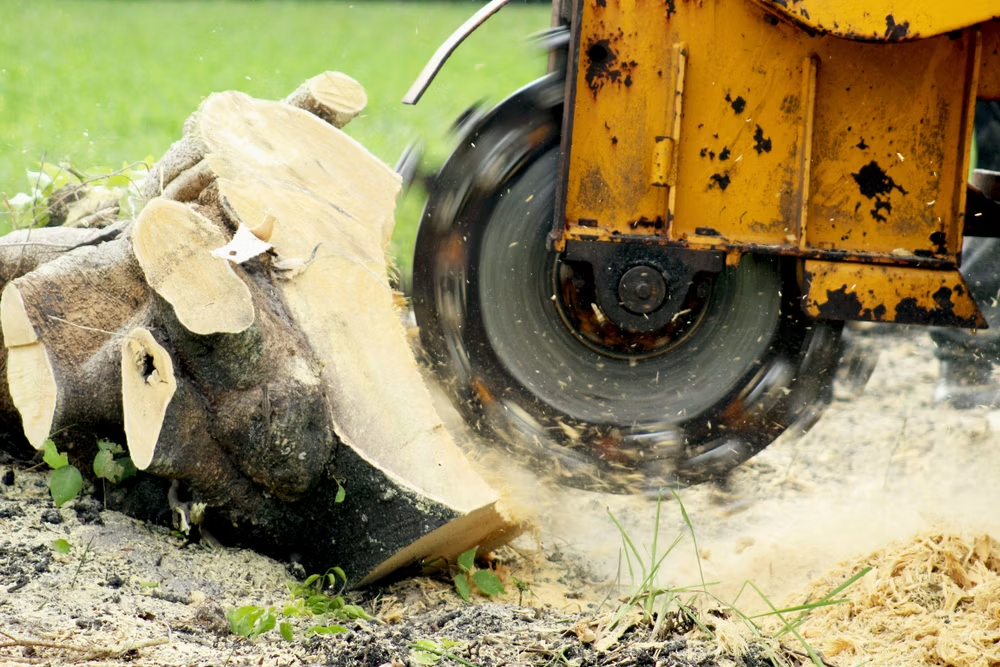
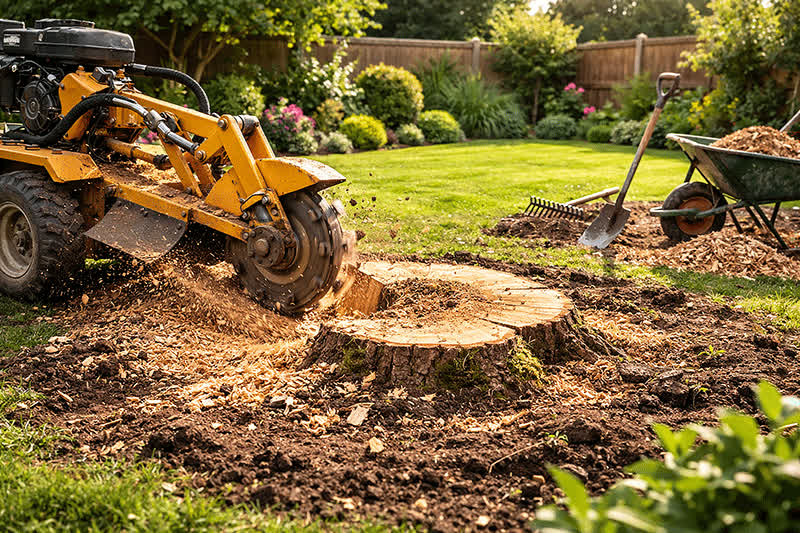
Stump grinding uses a purpose-built machine with a heavy cutter wheel, a thick steel disc studded with hardened teeth. The wheel spins fast, and an operator swings it across the stump in controlled passes. Each pass shaves off a thin layer of wood and turns it into chips.
You are not slamming the machine down through the stump in one hit. It is much more like sanding down a rough surface, only on a large scale, with the wheel gradually working the top of the stump lower and lower until it is below the surrounding soil. Once the visible stump is gone, the operator keeps going into the root flare until the depth requested on the estimate is reached.
How the grinder works, in plain English
Think of the cutter wheel like a very aggressive router bit. It does not chop or split the wood the way an axe would. Instead, the carbide teeth take small bites, and the wood comes off as chips. That controlled action is what lets an experienced operator work safely close to fences, sprinkler heads, patios, and lawn edges.
The machine itself sits on wheels or tracks and is walked into place. Smaller units are narrow enough to fit through a standard side gate. Larger self-propelled machines are used for bigger stumps, ranch work, or open front yards where access is easy.
What happens during an appointment
A typical residential visit follows the same rhythm every time. It helps to know what to expect so you can plan the rest of your day around it.
First, the crew arrives and does a short walkthrough with you. They confirm which stumps are included, check gates and access, and look for anything that could get in the way, irrigation heads, propane lines, water lines, electrical, septic components, low limbs, fencing, or landscaping.
Next, the machine is unloaded and staged near the first stump. Any loose debris or rocks around the base are moved so the wheel has a clean bite. The operator positions the grinder, drops the wheel, and begins the passes.
Once the stump is ground to the requested depth, the chips are raked back into the hole and mounded neatly over the top. The crew sweeps or blows off adjacent hardscape and does a final walkthrough with you before packing up.
What "below grade" means
Grade is just landscape shorthand for the level of the surrounding soil. "Below grade" means the finished bottom of the grind sits lower than the ground around it. For most residential lawns, several inches below grade is a comfortable working depth, deep enough that the stump is out of sight and the area can be topped with soil and grass.
The correct depth depends on what will be done with the area. That decision matters more than most homeowners realize, and it is worth discussing during the estimate.
How wide the grinding area may be
The width of the grind almost always exceeds the diameter of the visible trunk. That is because the root flare fans out from the base, and any large surface roots running along the ground also need to be leveled if the area will be mowed or landscaped. On a mature live oak, the flare and structural roots can easily double the diameter of the finished work area.
What happens to the underground roots
Ordinary stump grinding does not excavate every underground root. The machine addresses the stump and root flare, plus any large surface roots that would interfere with the finished use of the area. The deeper lateral roots stay where they are and slowly break down in the soil over time.
For most homeowners, that is exactly what they want. It leaves the soil undisturbed, keeps neighboring plants unaffected, and avoids the crater that comes with full excavation.
What happens to the wood chips
Grinding produces more material than most people expect. A single medium-sized stump can create several wheelbarrows of chips, because you are also removing the flare and adding some soil and small root pieces to the pile.
You have options. Chips can be left in place as a mound, spread across a landscape bed as mulch, or raked into a natural area. If you plan to grow grass in that spot, most of the chips should be scooped out and the depression filled with topsoil. Hauling excess material off is available when it is written into the estimate ahead of time.
Can the area be used afterward
Yes, with a little planning. For grass, the chip pile needs to be dug down and replaced with soil so the seed or sod can root into something other than raw wood. For a mulched landscape bed, you can often use the pile as-is. For fencing, patios, pavers, driveways, or any kind of construction, plan on a deeper grind and expect that additional soil work will still be needed to meet building requirements.
Tell the crew during the estimate what you plan to do with the area. It changes the depth, the cleanup approach, and sometimes the machine we bring.
What stump grinding does not automatically include
This is where a lot of confusion happens, so it is worth being direct. A standard stump grinding job removes the stump and root flare to a requested depth and cleans the immediate work area. Unless it is written into your estimate, it does not automatically include complete root-ball excavation, full lawn restoration, delivered topsoil, sod, seed, hauling every last chip off the property, utility repairs, or removing the standing tree.
None of that is bad news. It just means those items are additional scopes to discuss up front, so nobody is surprised at the end.
Texas Hill Country considerations
Local conditions shape every job. Limestone sits close to the surface across much of Kerr County, and hitting rock during a grind is common. Rocky or shallow soil can slow the work and, in some spots, limit how deep the wheel can go without banging into stone.
Narrow gates, slopes, and fenced backyards are also part of the landscape here. On acreage, uneven terrain and long driveways add setup time. Irrigation, propane, water, and electrical lines all deserve a careful look before any wheel touches the ground.
How homeowners can prepare
You do not need to do much, but a few small steps make the day smoother. Clear pots, hoses, kids' toys, and lawn furniture out of the path from the driveway to the stump. Mark any private irrigation, low-voltage lighting, or invisible fencing you know about. Make sure gates open fully. If there are pets, plan to keep them inside during the work.
We would rather see the stump in person than guess from a photo. Request a free onsite estimate and we will walk the site with you.
Quick FAQs
Is stump grinding messy?
Not especially. The chips stay in a controlled pile at the stump. There is some dust and minor debris kicked out during the work, and the crew cleans the immediate area before leaving.
Will the machine damage my lawn?
Small wheel tracks along the path in and out are normal, and grass usually recovers within a couple of weeks. Wetter ground and larger machines leave a heavier mark, which is one reason the walkthrough matters.
Can you grind a fresh stump, or does it need to sit for a while?
Fresh stumps are perfectly fine to grind. In many cases they are actually easier because the wood is still soft. There is no need to wait months after the tree comes down.
Do I have to be home during the appointment?
Not always. As long as the estimate has been done and the crew knows where to work and how to access the yard, many jobs can be completed without you on site.
How loud is it?
It is loud while it is running, comparable to a large mower or a chainsaw. Most single-stump jobs finish within an hour of active grinding, so the noise is temporary.
Will it hurt nearby trees or shrubs?
Grinding is highly localized. In most cases neighboring plants are unaffected because their root systems are largely undisturbed.
How soon can I walk on the area?
Immediately. Once the crew is done, the area is safe to walk across. You just want to be careful because the chip pile can hide small dips.
Do you need to knock on doors and mark utilities first?
For public utilities we work with the standard locate service where applicable. Private irrigation, low-voltage wiring, and unmarked lines are the homeowner's responsibility to point out.