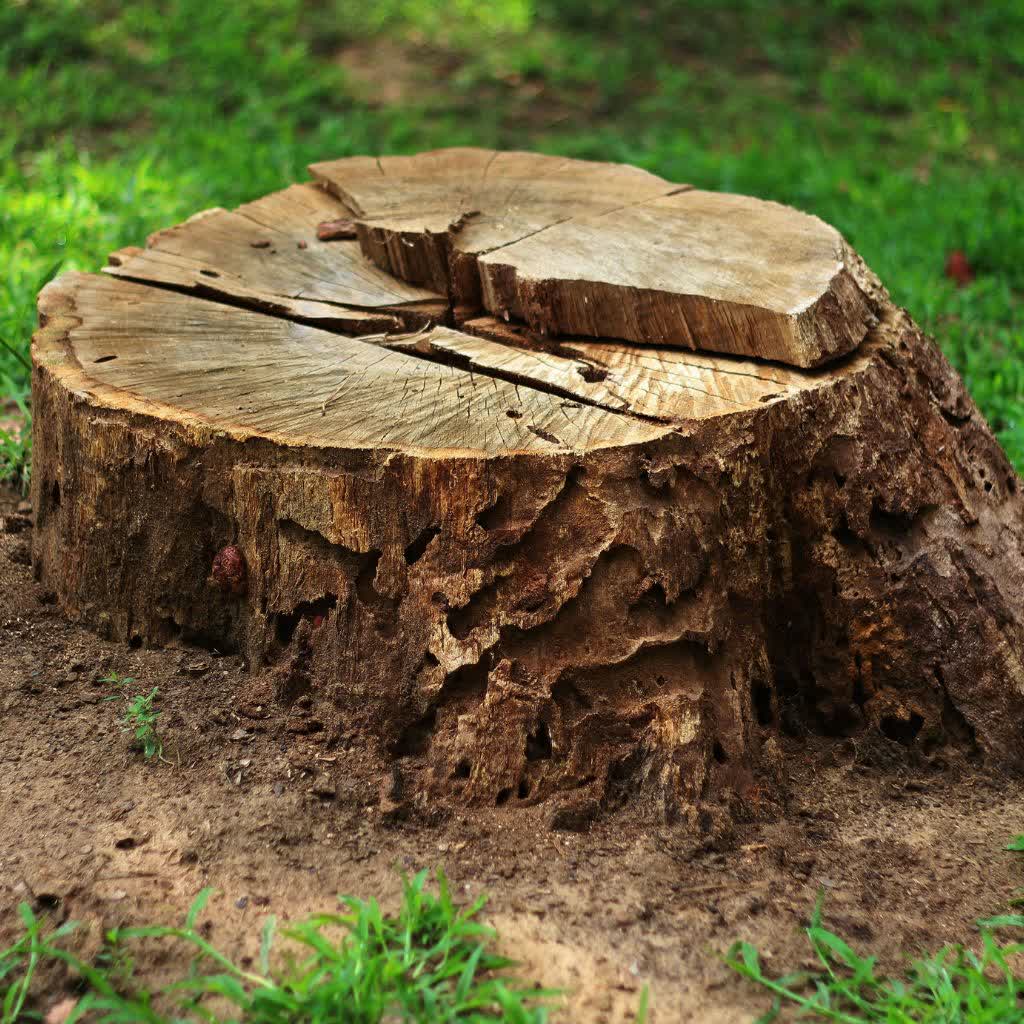
Homeowners frequently worry that a stump in the yard will bring termites to the house. There is a grain of truth in the concern, but the full picture is more balanced. Decaying wood in contact with soil can support wood-loving insects, and stumps are a classic example. That does not mean every stump on a property means an active infestation of the home. Here is what actually matters.
Why insects are attracted to decaying wood
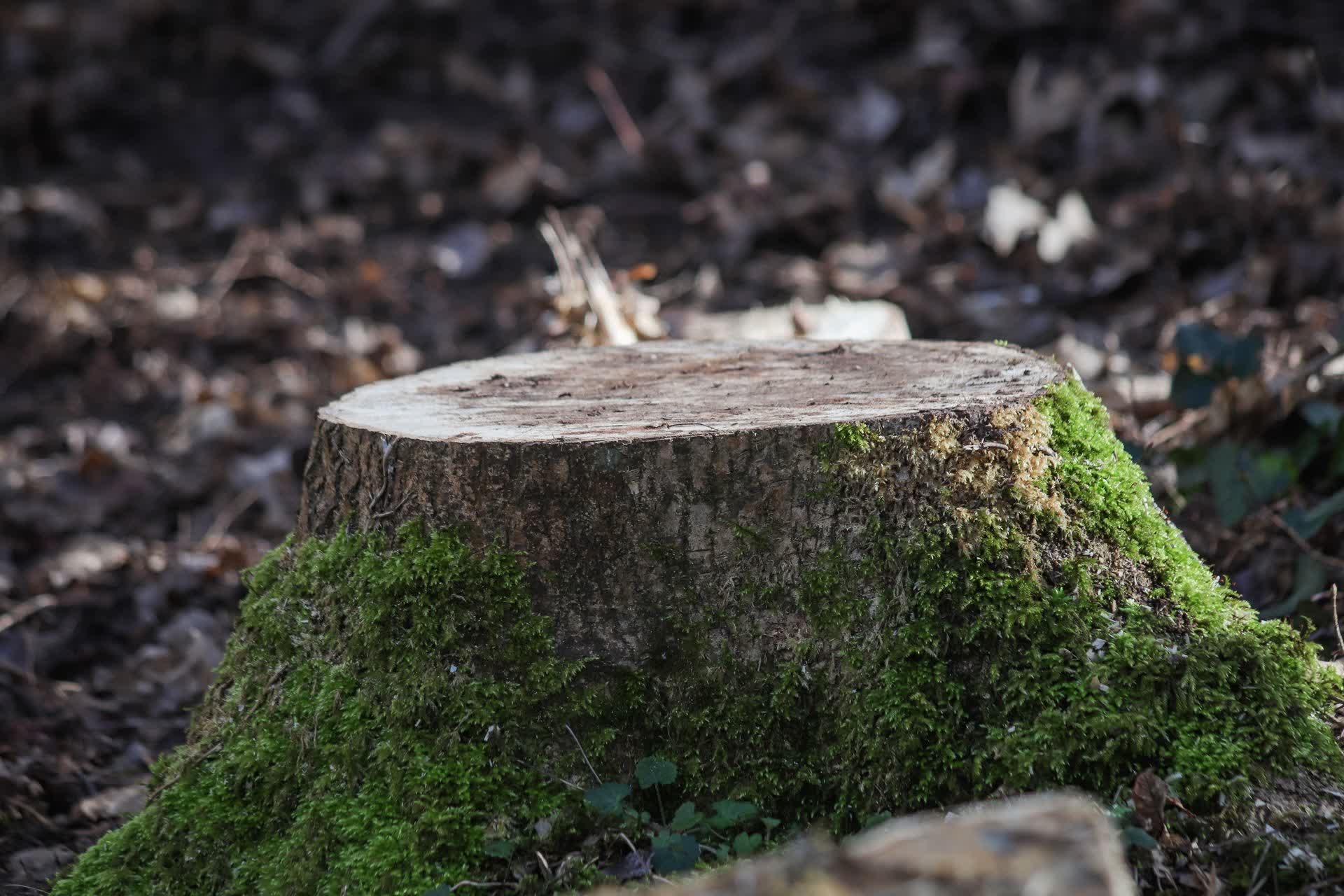
Wood-eating insects are drawn to conditions that make wood easy to use. Moisture, contact with soil, and a food source in the form of cellulose are the main ingredients. A stump slowly rotting in a shaded, damp corner of the yard checks all three boxes.
That does not automatically mean a colony is present in your particular stump. It means the conditions are favorable if one shows up.
Termites
Subterranean termites are the most common wood-destroying insect in Texas. They live in the soil and travel to food sources through small mud tubes. A stump provides both food and shelter, and any stump close to a structure is worth thinking about.
Carpenter ants
Carpenter ants do not eat wood the way termites do. Instead, they excavate galleries for nesting. Damp, decaying stumps are attractive nesting sites for them. From there they can move to sheds, decks, or trim boards.
Wood-boring beetles
Several beetle species use dead and dying wood as habitat for their larvae. Stumps often show small round exit holes when beetles have been active. In most cases the beetles that colonize a stump are not the same ones that infest structural wood in a house, but a decaying stump is still a place where they can live and multiply.
Why a stump does not automatically mean a structure is infested
Insects in a stump do not automatically become insects in a house. Termites in particular scout out food and may or may not find their way to a building. Distance, structural conditions, drainage, and existing pest activity all play a role. A stump alone is not proof of a home infestation.
Factors that increase concern
A stump close to the house. Excess moisture around the foundation. A history of termite activity in the area. Wood siding or trim touching the ground. Damaged siding or gaps around the base of the structure. Poor drainage that keeps soil damp. Any of these raise the risk that pests will find a way from the yard to the home.
How grinding changes the amount of solid wood remaining
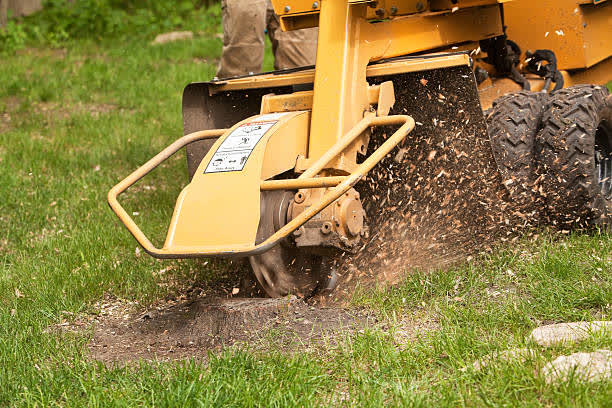
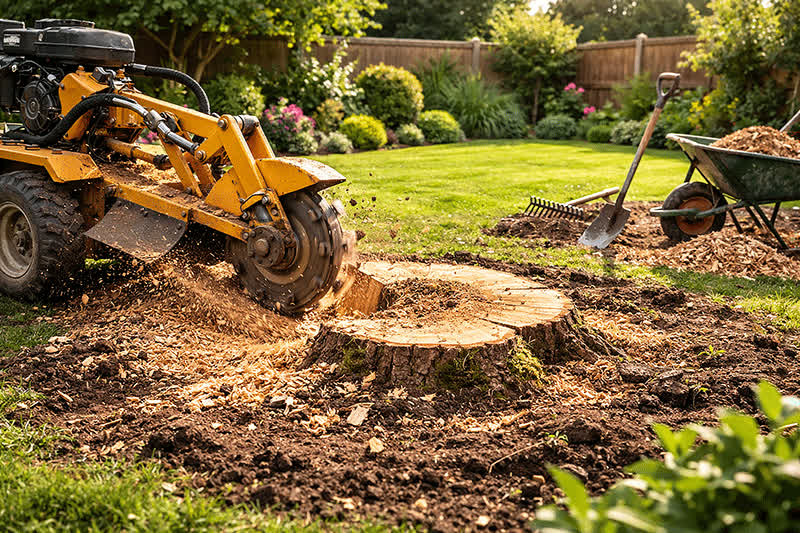
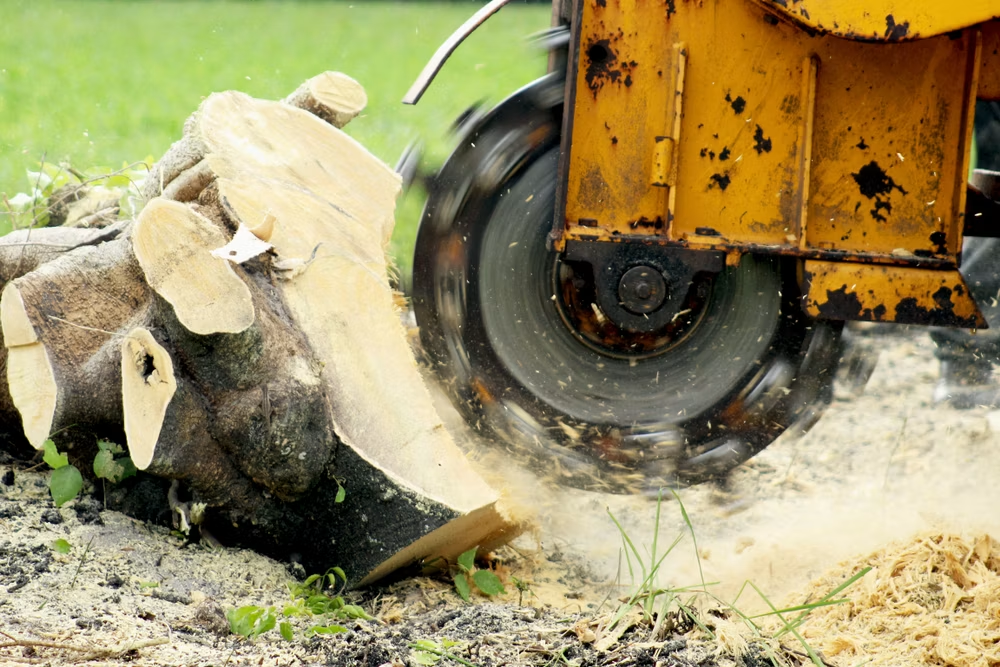
Grinding drastically reduces the volume of solid wood at the site. The stump and root flare become chips. The remaining lateral roots are less concentrated and less protected than an intact stump. That change alone reduces how attractive the location is as long-term insect habitat.
What happens to the chips
Loose chips on the surface dry out quickly and do not hold moisture the way an intact stump did. That surface exposure makes them a much less favorable place for termite colonies to establish compared to solid, buried wood.
Wood chips near foundations
Common sense clearance matters. A modest strip of soil, gravel, or mulch that is not piled up against the siding is the general recommendation for anything wood-derived near a foundation. That applies to bagged mulch, landscape wood, and to stump grindings.
Warning signs that justify calling a licensed pest professional
Mud tubes on foundation walls, small piles of what looks like fine sawdust indoors, damaged wood that sounds hollow when tapped, or winged swarmers inside the house are signs that a licensed pest professional should be involved. Stump grinding is not a substitute for a pest inspection.
Texas heat, humidity, and moisture conditions
Hill Country summers are hot and dry, which is generally unfriendly for termite surface activity. Wetter years and irrigated yards can shift the balance. Anything that keeps soil damp near the house, leaky spigots, mis-aimed sprinklers, poor drainage, raises the concern more than the presence of a single stump on the property.
What Cypress Creek Stump Grinding is and is not
Cypress Creek Stump Grinding is a stump grinding specialist, not a pest-control company. We can remove the wood that attracts pests. We cannot inspect a home for termites, apply pest treatments, or diagnose an infestation. If you have any of the warning signs above, a licensed pest professional is the right call.
Grinding removes the wood that attracts pests. If you also see warning signs indoors, pair the grind with a licensed pest inspection.
Quick FAQs
If I grind the stump, will the termites leave my yard?
Grinding removes a favorable food and shelter source. It does not treat existing colonies. Combining stump grinding with a professional pest evaluation is often the right combination when concerns exist.
How close is too close to the house?
The closer a decaying stump is to the structure, the more it is worth addressing. Anything within a short walk of the foundation is a reasonable candidate for grinding.
Do the leftover wood chips attract termites?
Loose surface chips are much less favorable than solid buried wood. Common sense clearance from siding is still recommended.
Do you offer pest treatment?
No. We handle the stump work and refer pest questions to licensed pest control professionals.