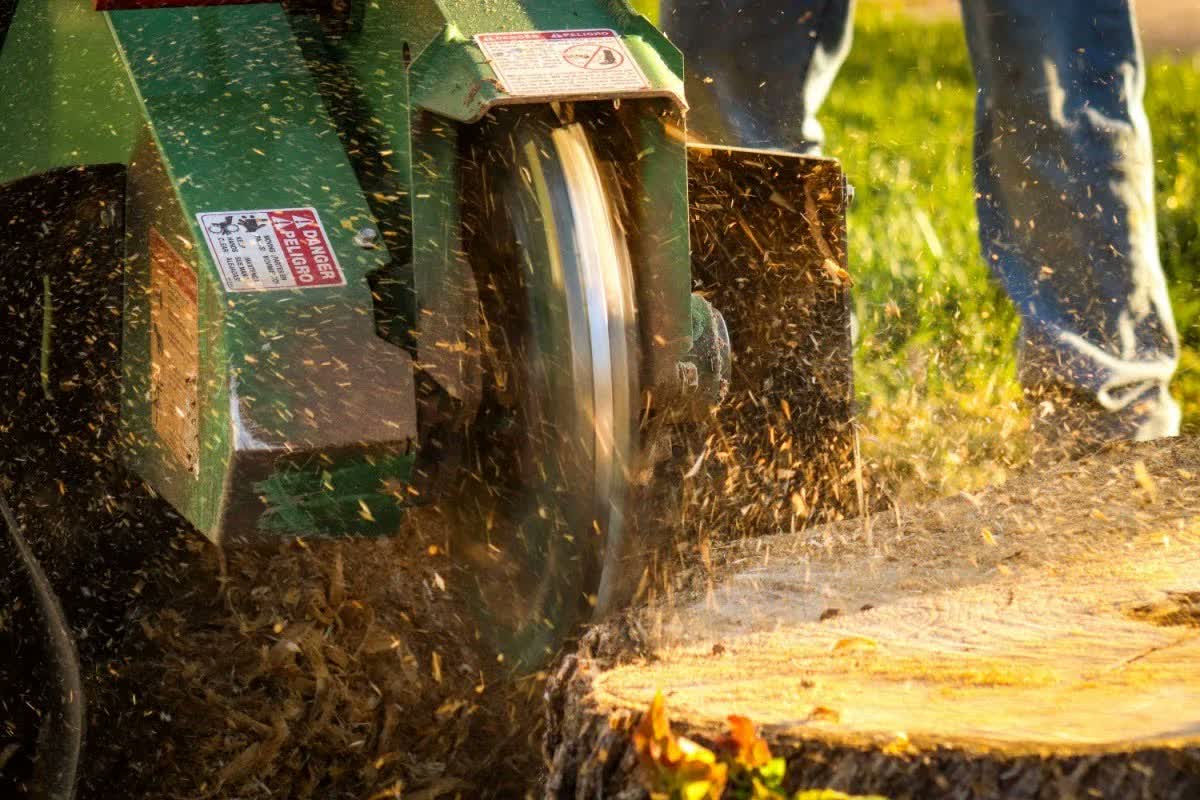
One of the most common questions homeowners ask after a stump job is whether grass will grow back in that spot. The answer is yes, in most cases, provided the area is prepared correctly. Grass planted straight into a raw pile of wood chips almost always struggles. Grass planted into a properly prepped spot with real soil almost always does fine. Here is how to make it happen.
Direct answer
In most cases, grass can grow over a ground stump. The pile of chips left behind is not a permanent problem, it is a temporary condition that has to be corrected before seed or sod goes down. Skip that step and the grass will thin, brown, or fail entirely. Do the step, and in a full season the area is usually indistinguishable from the rest of the lawn.
Why grass usually struggles in a mound of wood chips
Wood chips are almost pure carbon. As they decompose, soil microbes pull nitrogen out of the surrounding area to break them down. Nitrogen is what young grass needs to establish. In a raw chip pile, the microbes win and the grass loses.
There is also the physical problem. Grass seed and sod roots need something to grip. A mound of chips is loose, dries out quickly, and does not hold seed in place during a Kerrville rain.
Removing excess grinding debris
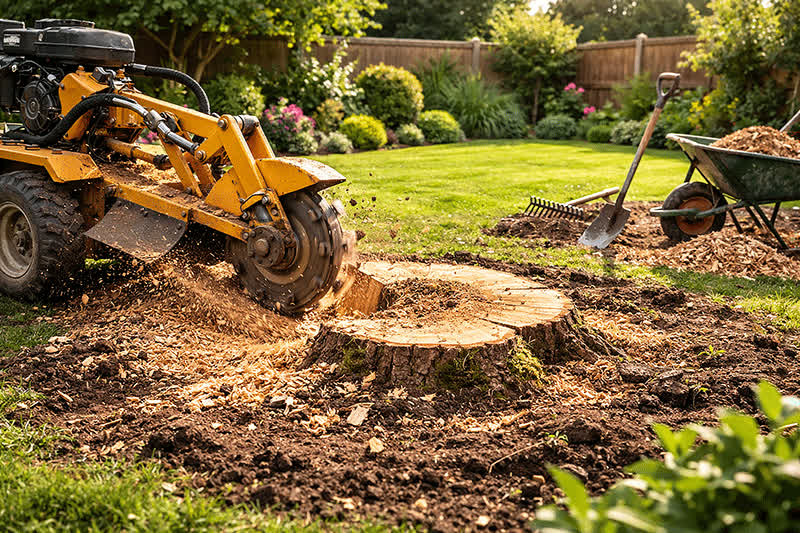
The first step is removing most of the chip pile. Not every chip has to go. The goal is to open up the depression so that clean soil can go in and grass can root into something reasonable.
How much material should be removed
As a general guide, plan to remove roughly two-thirds of the chip pile off the top of the depression. The remaining material at the very bottom of the hole is fine to leave. It will continue to break down slowly and will not stop grass from growing above it.
Filling the depression with suitable soil
Backfill with clean topsoil. Bagged topsoil from a garden center works fine for small stumps. For larger areas, buying bulk soil is more cost-effective. Mound the soil slightly above the surrounding grade because it will settle.
Matching the surrounding grade
Try to blend the new soil level with the yard around it. A flush surface is easier to mow and looks better as the grass fills in. A little extra soil over the edges of the depression is normal, it will settle down to grade over time.
Soil settlement
Expect the area to settle. As remaining wood decomposes underground, the soil above it drops a little. Adding a thin top-dressing once or twice during the first year keeps the surface level with the rest of the lawn.
Seed versus sod
Sod delivers instant coverage and hides the patch immediately. It is more expensive but very forgiving. Seed is cheaper and works well when the timing is right, though it requires more patience and better watering.
For a Hill Country lawn, common choices include Bermuda for full sun and drought tolerance, and St. Augustine for shadier areas.
Watering in Texas heat
Water lightly and frequently for the first two to three weeks. New grass, seed or sod, cannot tolerate dry soil, especially in a Kerrville summer. Short, frequent cycles keep the surface moist without waterlogging the area.
Choosing the right season
Late spring and early fall are the friendliest planting windows in this region. Peak summer is workable with more careful watering. Deep winter is generally not the moment to establish new grass. Drought conditions require patience and extra water, and sometimes it is smarter to wait a few weeks for a change in weather.
Why mushrooms can sometimes appear
It is common to see mushrooms in the months after a stump grind. That is normal fungal activity as buried wood breaks down. In most cases they are harmless and disappear on their own. If pets or small children are in the yard, the mushrooms can simply be knocked over as they appear.
Why the area may sink later
Even with careful backfilling, the area often sinks a little as time passes. Wood underground loses volume as it decays. Top-dressing with a thin layer of soil solves it.
Nitrogen and decomposing wood
If chips get mixed into the planting zone, the decomposition process can temporarily tie up nitrogen in that spot. A modest amount of a balanced lawn fertilizer applied at planting can offset the effect. This is not a reason to panic, just something to be aware of.
Hill Country soil considerations
Native soil around Kerrville is often shallow, rocky, and low in organic matter. Adding a good topsoil blend at the stump location gives the new grass a better start than the surrounding native soil alone would. Once established, most turf species do just fine in local conditions.
Step-by-step lawn-restoration checklist
Remove roughly two-thirds of the chip pile. Backfill with clean topsoil, mounded slightly above grade. Rake smooth and blend into the surrounding lawn. Seed or lay sod. Water lightly and frequently for two to three weeks. Top-dress with more soil in a few months to correct any settling. Mow at a normal height once the grass is well-rooted.
Common mistakes homeowners make
Planting straight into the chip pile without adding soil. Overwatering to the point of drowning new seed. Cutting sod short before it has rooted. Fertilizing heavily right after planting instead of using a starter product. Any of these can turn what should be a successful patch into a disappointing one.
Ask about depth and cleanup on the estimate so the area is truly ready for grass when the crew leaves.
Quick FAQs
How soon can I plant grass after the stump is ground?
You can start prep the same day. Once the chips are removed and topsoil is in place, seed or sod can go down immediately.
Do I have to remove every chip?
No. Removing most of the pile is enough. Leftover material at the bottom of the hole will continue to break down slowly and does not prevent grass from growing above it.
Should I use sod or seed?
Sod for fast coverage, seed for lower cost. Both work when the area is prepared correctly and the timing is reasonable.
Is complete lawn restoration part of stump grinding?
Only when it is specifically written into the estimate. Standard grinding leaves the area cleaned but does not include soil delivery, sod, or seed unless requested.
Why is my patch settling months later?
Buried wood loses volume as it decays. A light top-dressing brings the area back to grade.