
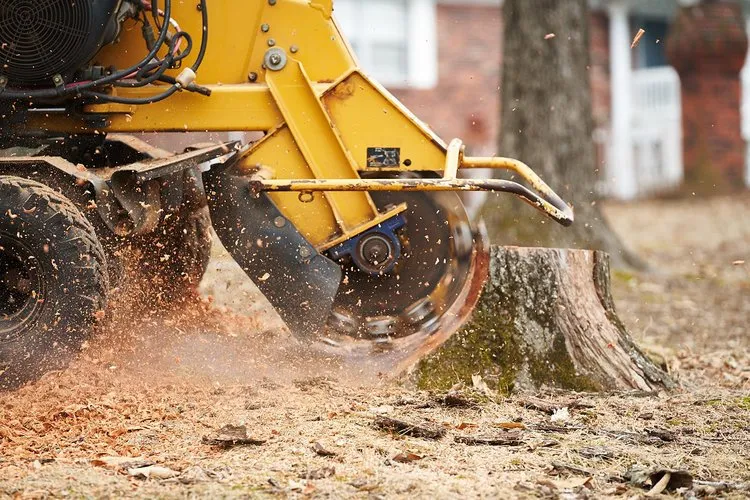
Professional Stump Grinding in Kerrville, Texas
Remove unwanted tree stumps safely, professionally, and efficiently with Cypress Creek Stump Grinding. Proudly serving Kerrville and the Texas Hill Country.
One service. Done exceptionally well. In one of the most beautiful parts of Texas.
Stump grinding is one of those jobs that looks simple until you actually try to do it right. From the outside it's just a piece of dead wood in the yard. Up close, it's a knot of root flare, buried rock, irrigation lines, decades-old heartwood, and, if you get it wrong, a very expensive mistake sitting next to your foundation or your fence.
We're Cypress Creek Stump Grinding. We're a family-owned specialist crew based in Kerrville, and we grind stumps across the Texas Hill Country every week. That's the whole job. We don't do tree work. We don't do land clearing. We don't do lawn care. We show up with the right machine, the right teeth, and years of experience with the specific mix of oak, cedar, and mesquite that grows on Hill Country soil, and we leave you with clean ground that's ready to use.
Homeowners call us for the obvious reasons: the stump left behind when a big oak came down in a storm, the mesquite the previous owner cut to the base and never finished, the row of ornamental stumps making the front yard look tired. Grinding turns those into a clean patch of ground that can be sodded, seeded, mulched, or built over, usually the same day.
Ranch owners call us for a different scale of problem: fence lines full of old cedar stumps, cleared pastures that still bristle with dozens of stubs, or new construction sites where the builder needs the ground clean before pouring. We've handled both single-stump residential jobs and multi-day ranch clean-ups from Center Point to Harper.
Businesses, HOAs, and property managers call us when appearance and liability matter, a shopping-center island with a decaying stump, a neighborhood entrance that needs a fresh look, a rental property that has to pass an inspection. Any of those, and we treat the site with the same standards we'd bring to our own driveway.
Every property is different. Every stump has its own story, the species, the age, what's around it, what's underneath it, and what you want the ground to become next. That's why we do free on-site estimates on nearly every job. It's the only way to give you a real number, and it's the only way we're comfortable quoting one.
A specialized cutter wheel does what shovels and chainsaws can't.
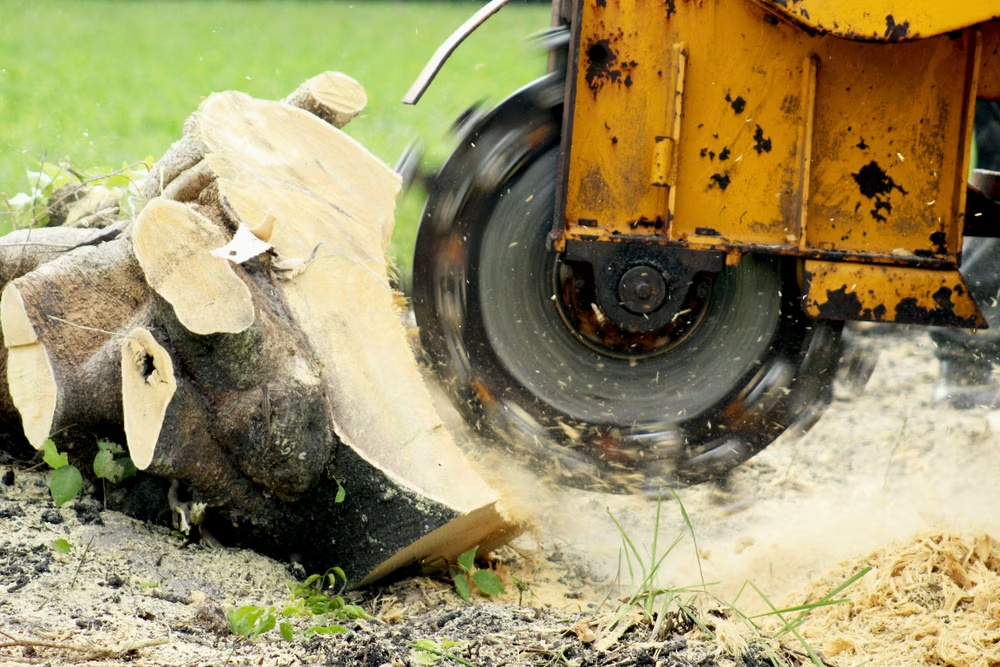
Stump grinding uses a high-torque cutter wheel, a spinning steel disc studded with carbide teeth, to shave a stump and its root flare into wood chips. We take controlled passes, going deeper each time, until the stump is well below the surrounding grade. Our standard is six to twelve inches below grade, and we go deeper on request when you're planning a slab, a driveway, or a new planting in the same spot.
A common question we get: what happens to the roots? For nearly every Hill Country species, the answer is that the lateral roots stay in the ground and simply decompose over the following years. That's not a shortcut, it's the right way to do this. The roots are disconnected from the canopy that was feeding them, so the tree is truly done, and leaving them in place avoids tearing up a wide swath of your yard, your neighbor's yard, or the root systems of nearby trees you actually want to keep.
Full excavation of the root ball, sometimes called stump removal, is a very different service. It requires heavy equipment, leaves a crater the size of a small pool, and is only appropriate on a handful of construction sites. For every normal homeowner, rancher, and business we work with, grinding gives a cleaner, faster, less invasive, and permanent result.
Once the stump is ground, the practical benefits stack up quickly. Safety, no more trip hazards in the lawn. Appearance, the yard looks intentional again. Functionality, mowers, sprinklers, and foot traffic move where they should. And future landscaping is finally an open question rather than a compromise around a piece of dead wood.
Nine reasons a stump is worth grinding out.
Stumps hide in tall grass. Toes catch, ankles roll, and kids running through the yard don't see them coming until it's too late. Once a stump is ground below grade, that danger disappears entirely.
If you have a rental property, an HOA common area, or you host events on your land, that liability piece is worth thinking about. A ground-down stump is one fewer thing on your property that can put someone in an urgent-care waiting room.
There's nothing more frustrating than steering a mower around the same stump every single week. It slows you down, it dulls blades if you accidentally clip it, and it leaves an awkward island of unmown grass around the base.
After grinding, you roll straight over the spot. No stopping. No trimming. No cursing under your breath. If you have a lawn service, they'll thank you.
Stumps date a property. Even a beautifully landscaped Hill Country yard looks unfinished when there's a knee-high chunk of dead wood parked in the middle of it.
Grinding is one of the highest-impact, lowest-cost visual upgrades you can make. It's the kind of thing you notice every time you pull into your driveway, and every time you show the property to somebody new.
Dead and decaying wood is essentially a five-star hotel for termites, carpenter ants, wood-boring beetles, and every other pest that wants to move into your house next. A rotting stump twenty feet from your foundation is not a neutral thing.
Remove the stump, remove the invitation. It's one of the simplest pest-prevention moves a homeowner can make on a Hill Country property.
Certain species, hackberry, chinaberry, crepe myrtle, some cedars, will happily sprout new shoots from a stump or its lateral roots. If you just cut the tree at the base, you've committed yourself to years of hacking back suckers.
Grinding the stump and root flare well below grade disrupts that regrowth pattern for the overwhelming majority of species. The tree is done.
A stump takes up more space than it looks. Between the stump itself, the root flare, and the unusable ring of grass around it, you're often losing 30 to 60 square feet of yard to a piece of dead wood.
Once it's ground, that square footage comes back. Extend a garden bed, widen a path, add a bench, plant something new, the possibilities open up.
You can't lay sod over a stump. You can't run a sprinkler line through it. You can't build a raised bed on top of it. Landscape designers routinely have to work around old stumps, and the result is a compromise every time.
Grind first, design second. It gives you a blank slate to work with, and the finished landscape will look intentional rather than improvised.
Adding a patio, a shed, a fence line, a pool, an addition? Anything you build over a stump is going to have problems eventually. As the wood decays, the ground settles. Your slab cracks. Your fence posts lean. Your pavers dip.
Grinding to construction depth, well below the finished grade, gives your builder solid, compactable ground to work with.
Real-estate agents will tell you the same thing: clean, finished landscaping is one of the fastest ways to signal that a property has been well cared for. A yard peppered with old stumps signals the opposite.
If you're planning to sell in the next few years, grinding out the stumps is a small, high-return investment that quietly helps every showing go a little better.
Every stump is different. That's why every estimate is free.
We don't publish a per-inch price list, because it would lie to you. Two stumps that look the same from the driveway can be very different jobs by the time we walk up to them. Diameter is only one variable, species, age, root flare, surrounding landscape, access, and what's underneath all move the number.
Instead of guessing over the phone, we come out and look. Estimates are free, they're written, and there are no surprise charges added afterward. Every job we quote includes the grinding plus the standard cleanup, not a stripped-down "grind and go" number designed to look artificially low.
On simple, single-stump jobs we can often quote from photos to save you a visit. For anything with access questions, multiple stumps, or ranch scale, an on-site walk-through is the right call.
Measured at ground level, root flare included. Bigger stumps take more time.
Live oak, post oak, and mesquite grind slower than cedar, elm, or hackberry.
Fresh, seasoned, or long-dead, each cuts differently.
A wide, flared base is functionally a larger stump.
Grinding radiating roots is optional and priced separately.
Limestone is a Hill Country reality. It affects tooth wear and time.
A steep site is slower and needs a different setup.
Gate width, driveway grade, and where we can stage the machine.
More stumps in one visit lowers the per-stump price.
Chips are raked into a neat mound over the hole, cleanup included.
Panel removal or unusually tight gates add setup time.
Marked utilities are safe. Unmarked ones need locating first.
Care around irrigation, beds, patios, and neighboring plants.
The right machine for the site, larger equipment for open ranch, smaller for tight backyards.
Five simple steps from first call to finished site.
- Step 01Get a Free Estimate
Call, text, or fill out the form. Estimates are always free with no obligation.
- Step 02Property Visit
We come out, free, no obligation, walk the site, measure each stump, check utilities, and confirm the plan.
- Step 03Professional Grinding
The right machine for your site. Every stump ground below grade with careful attention to what's around it.
- Step 04Cleanup
Chips raked into a neat mound over the hole. Surrounding turf cleaned up.
- Step 05Project Complete
You get the ground back, ready for sod, seed, mulch, a new tree, a fence post, or a patio.
Specialized Stump Grinder vs. General Contractor.
There's a real difference between a crew that grinds stumps every day and one that grinds stumps between other jobs. Here's what that looks like in practice.
Every Hill Country species has its quirks.
We grind all of them. Here's what to expect from the ones we see most often.
Dense, slow-cutting, and worth doing right. Oak is the workhorse tree of the Hill Country and the stump you're most likely to see on a Kerr County property.
Massive root flares and thick heartwood make live oak one of the most physically demanding stumps to grind. Also one of the most rewarding when it's done.
Slightly less dense than live oak but often larger in diameter. Careful grinding is important where oak wilt is a concern in the area.
Ashe juniper, 'cedar' locally, is fibrous and oily. The right teeth make quick work of it, and the resulting mulch smells wonderful for weeks.
The visible stump is small. The taproot is enormous. We grind the crown and root flare thoroughly; the deep taproot dies in place.
Cedar elm and American elm show up all over the Hill Country. Straightforward to grind with clean results.
Common along creeks and fence lines. Softer wood than oak, but hackberry can sprout back from roots if not ground deep enough, we plan for that.
River-bottom pecans in Kerr and Bandera counties can be enormous. Dense, straight-grained wood that grinds cleanly with the right machine.
Bald cypress along the Guadalupe and its tributaries. Soft, fibrous wood, but often surrounded by moisture and delicate landscaping that needs care.
Crepe myrtle, redbud, arizona ash, ornamental pear, smaller stumps that still need to be gone properly if you're going to reclaim the bed.
Rooted in the Hill Country.
Based in Kerrville and serving every town, subdivision, and ranch across Kerr, Gillespie, Kendall, and Bandera counties.
Straight answers from a Kerrville crew.
How deep do you grind stumps?+
Our standard is six to twelve inches below the surrounding grade. That's deep enough to disappear the stump for good, plant grass over it, or lay sod. When customers are planning a patio, driveway, or foundation over the spot, we grind deeper, usually eighteen to twenty-four inches, and we discuss that in the estimate.
Can grass grow back where the stump was?+
Yes, and it's one of the most common reasons people call us. Once the stump is ground and the excess wood chips are removed or spread thin, the spot can be topped with soil and seeded or sodded like any other patch of yard.
Can I plant another tree in the same spot?+
You can, but we usually recommend waiting a season or planting a few feet away. The remaining wood chips and root fragments tie up nitrogen in the soil as they decompose, which can slow a young tree down. If you scoop out the chips and backfill with clean topsoil, you can plant sooner.
Will the roots grow back into the tree?+
For nearly every Hill Country species, no. Once we grind the stump and root flare well below grade, the root system is disconnected from any canopy that was feeding it, and it slowly decomposes in place. A handful of species, hackberry, chinaberry, some crepe myrtles, can sprout from lateral roots, and we mention that during the estimate if it applies.
Can you grind a stump that was just cut?+
Absolutely. Fresh stumps are a little softer and can throw larger chips, but they grind just fine. There's no benefit to waiting, if anything, doing it while the tree crew is still on your radar makes the whole project easier to think about.
What about really old stumps that have been there for years?+
Old stumps are usually easier and faster to grind because much of the wood has already started to break down. We grind them the same way, and the finished result looks the same, clean ground, ready to use.
Can you grind multiple stumps in one visit?+
Yes, and it's the most cost-effective way to do it. Whether you have three stumps around a house or thirty across a ranch, one setup and one crew visit brings the per-stump cost down significantly.
Can you work close to fences?+
Yes. Careful work along fence lines is part of the job. We often grind right up against wood, wire, and pipe fencing without touching the fence itself. In the rare case a panel has to come off for access, we discuss that ahead of time.
Is it safe to grind near a foundation?+
Yes, when it's done properly. We grind slowly and deliberately when we're near a house, shed, or slab, and we adjust depth as needed to protect the structure. If a stump is truly against a foundation, we walk through the options during the estimate.
What about utility lines and irrigation?+
We always ask about marked utilities and irrigation before the grinder starts. If lines aren't marked, we can wait until they are. The last thing anyone wants is a surprise sprinkler geyser or a nicked cable, a five-minute conversation up front prevents both.
Do I need to be home when you grind?+
Not necessarily. As long as we can access the property, you've approved the estimate in writing, and we can reach you by phone if a question comes up, we're happy to work while you're at the office or out of town.
Do you clean up when you're done?+
Yes. Cleanup is part of every job by default, not a line item we try to add later. Chips are raked into a neat mound over the hole and we clean up the surrounding turf so the site looks tidy when we leave.
What happens to the wood chips?+
We mound them into a neat pile over the hole. They compost down into excellent mulch over the next six to twelve months and are perfect for garden beds if you want to shovel some off before that.
Should I remove the mulch pile after you leave?+
It depends on what you're doing with the spot. If you're planting grass right away, scoop out the excess chips, backfill with topsoil, and seed. If you're mulching the area anyway, leave the pile and rake it flat over the next few weeks.
How long does stump grinding actually take?+
A single residential stump usually takes twenty to sixty minutes of grinding, plus setup and cleanup. A yard full of stumps or a ranch job can run several hours or more than a day. We give you a realistic time window during the estimate.
Can you grind large oak stumps?+
Yes. Large oak is what our equipment is built for. We've ground live oaks with root flares four and five feet across. Bigger stumps take longer and cost more, but the process and the finished result are the same.
Are cedar stumps hard to grind?+
Not with the right teeth. Cedar's fibrous nature can gum up a poorly maintained grinder, but a well-tuned machine chews through it quickly. And the mulch smell is a small bonus.
What about mesquite?+
Mesquite is deceptively deep, the taproot goes a long way down. We grind the visible stump and root flare thoroughly. The remaining taproot is disconnected from any canopy and rots in place, so it won't come back.
How soon can you get out to my property?+
Most weeks we can be on-site for a free estimate within a few business days, and the grind itself is usually scheduled within a week or two of your approval. Busy seasons can stretch that a little, we tell you honestly when you call.
Is stump grinding loud?+
It's a real piece of machinery, so yes, it makes noise while it's cutting. Most residential grinds are done within an hour of continuous work. We're mindful of neighborhood hours and happy to coordinate around HOAs and quiet hours where they apply.
Will grinding damage my lawn?+
Minimally, if at all. We use the smallest machine appropriate for the job to keep tracks light on the turf, we lay down protection when needed, and we stage the equipment carefully. Some minor turf compression is normal and recovers within days.
Can I mow over the spot afterward?+
Once the chips are settled, yes. If you leave them mounded, mow around the pile until it composts down or you rake it flat. If you backfill with topsoil and reseed, follow the standard new-grass mowing routine for that area.
Why should I grind it instead of just leaving it alone?+
Left alone, a stump slowly rots, invites insects, sprouts back on certain species, hides trip hazards in the grass, and complicates every future landscaping decision. Grinding is a one-time visit that removes all of that.
Do you actually give free estimates?+
Yes. Every estimate is free and comes with no obligation. We'd rather come out and give you a real number than guess over the phone and get it wrong.
What areas do you serve?+
We're based in Kerrville and cover the full Texas Hill Country, Ingram, Center Point, Comfort, Boerne, Fredericksburg, Hunt, Harper, Mountain Home, Medina, Bandera, and the ranches in between. If you're outside that area and have several stumps, call us anyway, we do travel for larger jobs.
Ready to get rid of that stump?
Whether you have one stump or several, we're here to help. Contact Cypress Creek Stump Grinding today for a free, no-obligation estimate.
Serving Kerrville and the Texas Hill Country.
One stump or one hundred. Same crew. Same standard. Free estimates, every time.